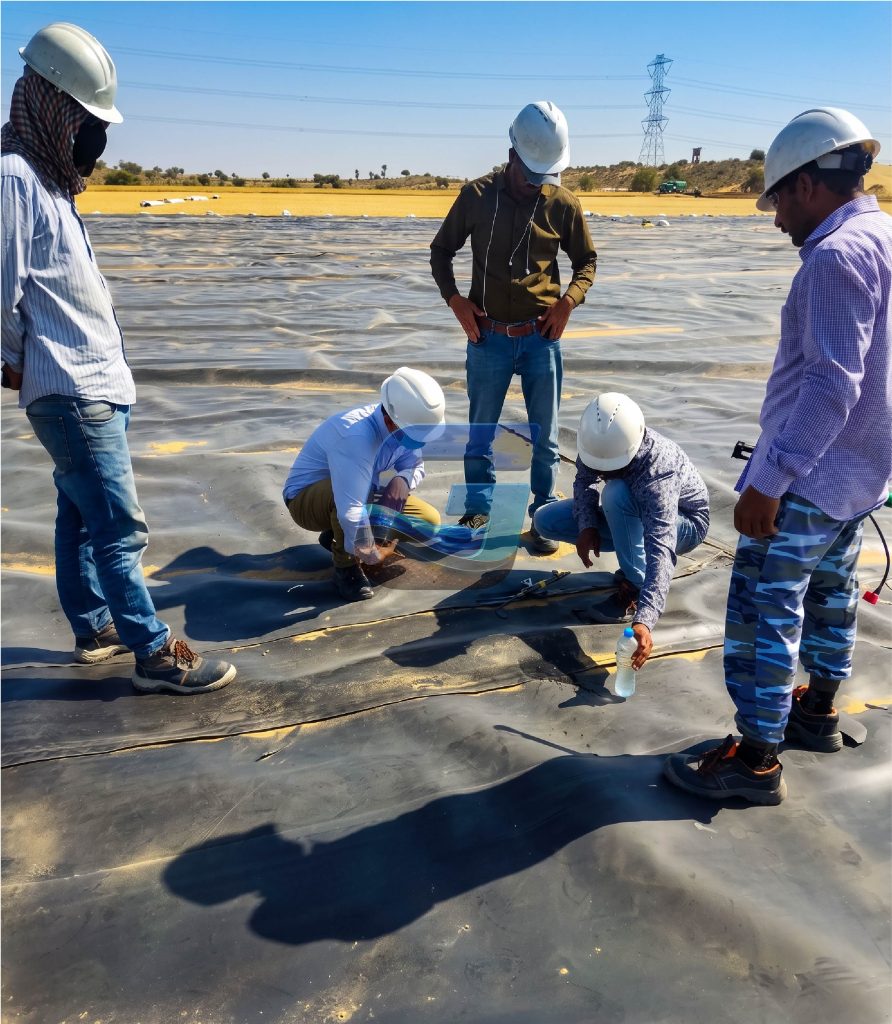
Geo-membrane is generally grouped within the broader family of geo-synthetic materials, although in day-to-day operations it is rarely treated as a standalone product. Its reference often appears alongside liners, separators, and barrier elements that are selected as part of a system rather than as individual components. Because of this, the way it is discussed internally differs from how it is usually presented in external descriptions. In many projects, geo-membrane considerations emerge during coordination between design, procurement, and field execution rather than during early planning. At that stage, attention shifts away from basic material descriptions and toward compatibility with installation sequencing, access limitations, and interface conditions with adjacent layers. These factors tend to influence outcomes more than generalized performance claims. Within geo-synthetic works, geo-membrane is affected by handling cycles, temporary storage arrangements, and the timing of placement relative to other activities. These operational details are often undocumented, yet they have a cumulative impact on how the material behaves once it becomes confined within the structure of the project. Over time, this behavior is attributed to the system as a whole rather than to the liner itself.
From a management perspective, geo-membrane is frequently referenced in reports as a completed scope item, even though its interaction with loads, fluids, and surrounding materials continues throughout the life of the installation. As a result, its presence is acknowledged without continuous evaluation unless secondary indicators suggest an issue elsewhere in the geo-synthetic assembly. Over the life of a project, geo-membrane layers experience a variety of interactions that are not always visible in surface inspection or initial testing. Thermal expansion and contraction cycles, micro-creep under sustained load, and the redistribution of fluids at interfaces contribute to subtle changes that may only become apparent through cumulative system effects. While laboratory or manufacturer-provided data often describe nominal physical or chemical properties, the real-world behavior is largely governed by these operational and environmental variables. As a result, the geo-membrane’s influence is better understood in the context of system performance and integration rather than in isolation. In addition, geo-membrane performance is continuously influenced by external elements, whether buried beneath layers of soil and ballast or exposed temporarily during maintenance activities. Chemical exposure, differential moisture distribution, and localized settlement events interact with the material’s physical characteristics in ways that are often subtle and cumulative. Monitoring programs tend to focus on observable indicators, leaving many underlying interactions unrecorded, though they can have long-term implications for system durability. From a strategic perspective, the geo-membrane is part of a dynamic, multi-component assembly, and recognizing its role requires attention to context, sequencing, and system inter-dependencies rather than isolated metrics.
HDPE Membrane
HDPE membrane material is generally referenced for its stability within layered containment assemblies. Its performance is influenced more by installation sequencing and load interaction than by nominal material description.
Read More.....LLDPE Membrane
LLDPE liners are typically discussed in relation to deformation tolerance and interface behavior. Their role is usually evaluated as part of a composite system rather than independently.
Read More....PVC Membrane
PVC membranes are considered in environments where adaptability to surface variation is required. Long-term behavior depends largely on surrounding materials and exposure conditions.
Read More....Geo-Textile
Geotextile fabrics function primarily within layered systems to manage interaction between adjacent materials. Their contribution is often indirect and system-dependent.
Read More.....PVC Water Stopper
PVC water stopper components are integrated at structural interfaces to manage movement and continuity. Their effectiveness relies on correct placement rather than material characteristics alone.
Read More.....Dimple Membrane
Dimple membranes introduce controlled void spaces that influence moisture movement. Their performance varies with backfill conditions and confinement.
Read More....HDPE Smooth Liner
HDPE Smooth liners are typically evaluated for contact behavior against prepared surfaces. Interface response tends to govern their functional role over time.
Read More.....HDPE Textured Liner
HDPE Textured variants are referenced in relation to frictional interaction. Their effectiveness is context-driven and linked to slope and load conditions.
Read More....LLDPE Smooth Membrane
LLDPE Smooth liners are often selected where conformity is required. Their operational behavior reflects combined system stresses rather than isolated properties.
Read More.....LLDPE Textured Membrane
LLDPE Texturing alters surface response under load. Practical outcomes depend on placement geometry and restraint conditions.
Read MoreE - Lock
HDPE E locks elements are introduced to assist alignment and continuity. Their contribution is structural rather than material-focused.
Read More....Geo- Composit
Geocomposite systems combine multiple materials into a single functional unit. Performance emerges from interaction rather than individual layer dominance.
Read More.....FPP Membrane
PolyPropylene membranes are considered where movement accommodation is necessary. Long-term behavior reflects environmental and mechanical influences.
Read More....Moisture Control Systems
Waterproofing materials are applied within local construction contexts. Their effectiveness depends on execution practices and site-specific conditions.
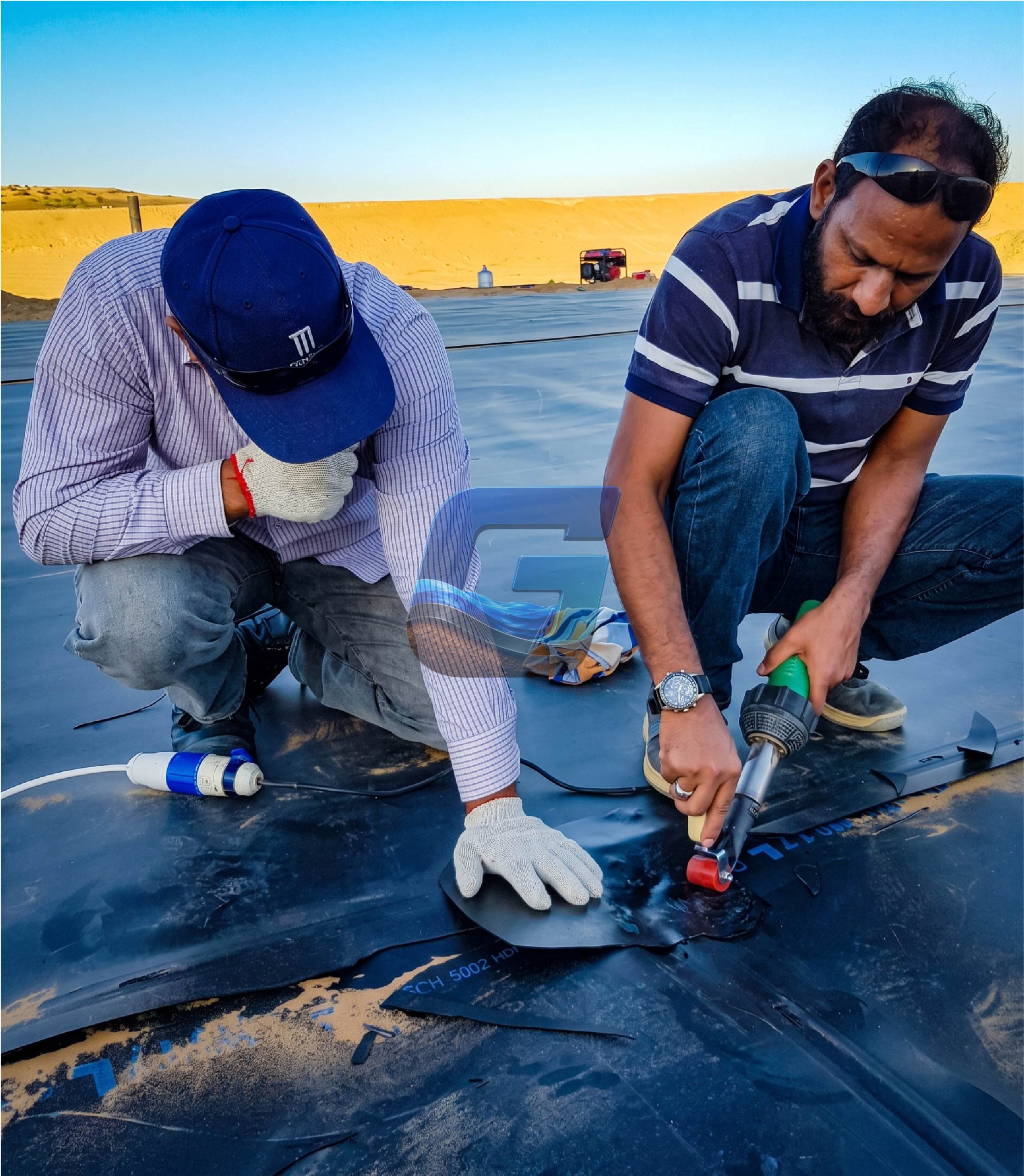
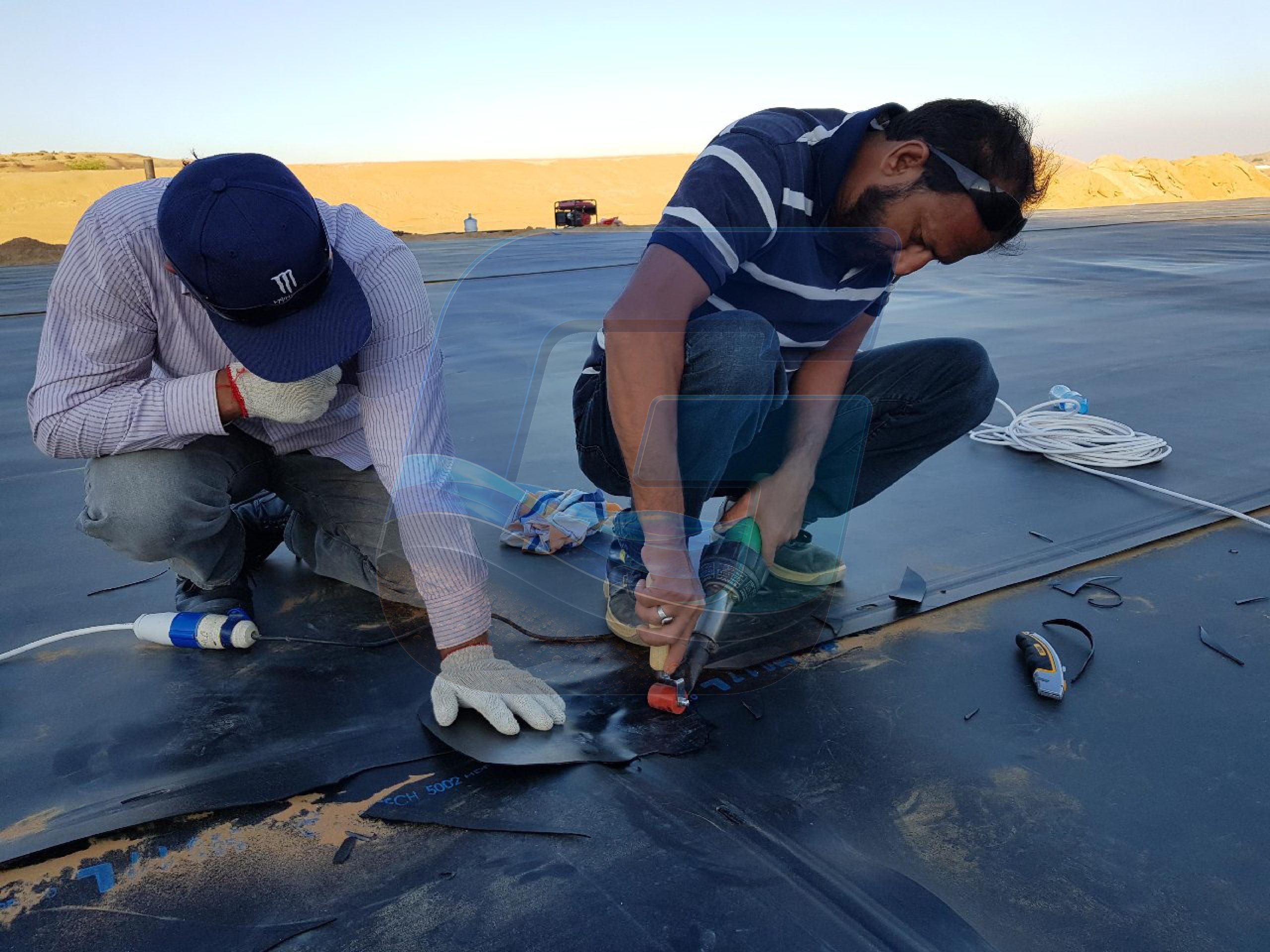
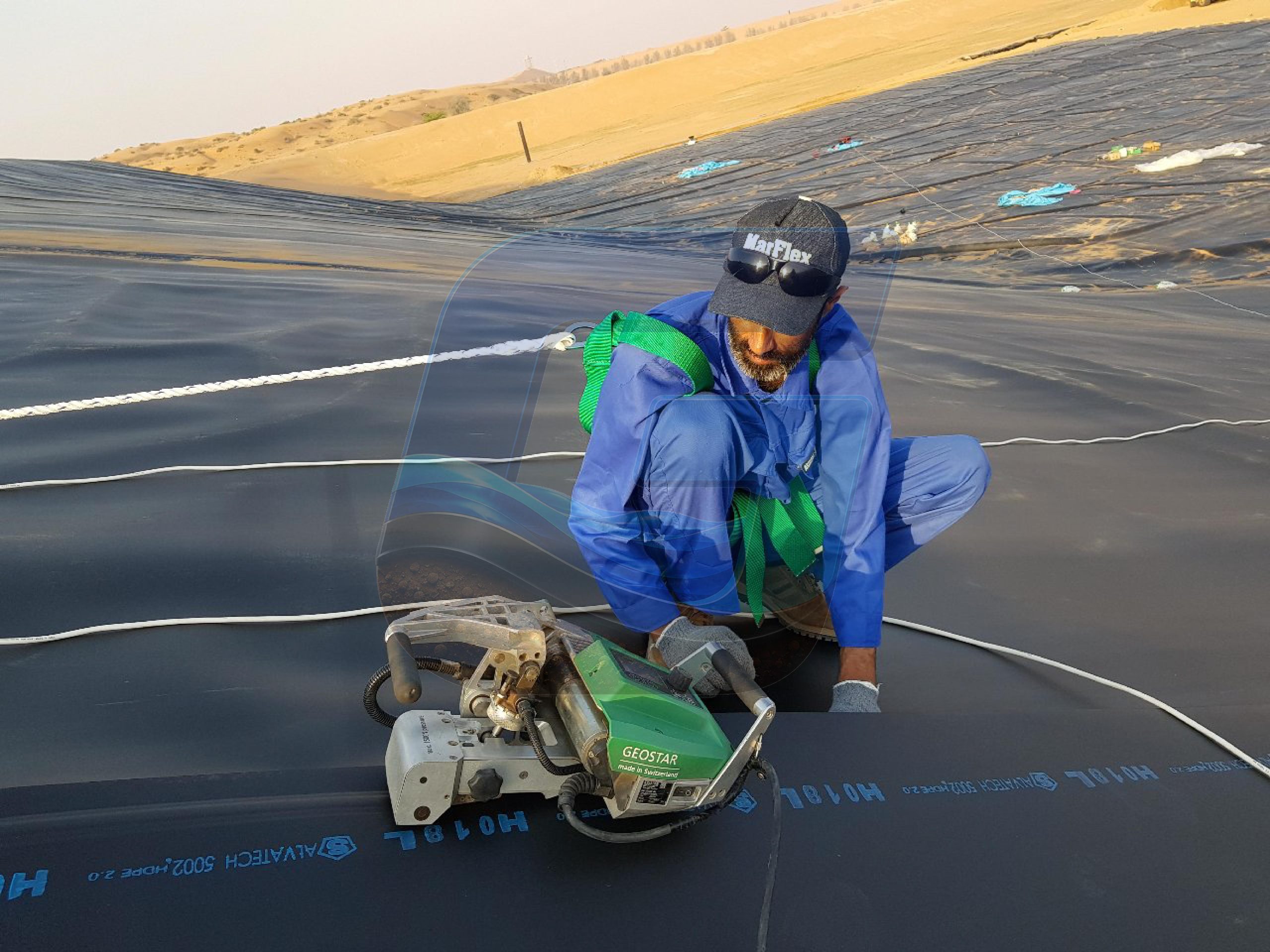
Read More....installation of Membrane

installation of PVC Water stopper

Wedge and Extrusion Fabrication